



Natriuretic Peptide Receptor (NPR)
Natriuretic Peptide Receptor; NPR; NPR-A; NPR-B; NPR-C
Natriuretic peptide receptors can be divided into three types: NPR-A, NPR-B (guanylate cyclase-A and guanylate cyclase-B) and NPR-C. All three receptors have an effect on biological second messengers. NPR-A and NPR-B are guanylate cyclase receptors, and their activation can lead to increased cGMP levels, while the activation of NPR-C can lead to the inhibition of adenylate cyclase activity and increased phospholipase C activity. Natriuretic peptide receptors play an important role in the regulation of blood pressure and cardiovascular homeostasis[1].
All Product Categories
-
Natriuretic Peptide Receptor (NPR) Inhibitors
(3)
View all products
-
Natriuretic Peptide Receptor (NPR) Agonists
(4)
View all products
-
Natriuretic Peptide Receptor (NPR) Antagonists
(2)
View all products
-
Natriuretic Peptide Receptor (NPR) Activators
(7)
View all products
-
Natriuretic Peptide Receptor (NPR) Ligand
(1)
View all products
-
Natriuretic Peptide Receptor (NPR) Related Products (30)
Related Products (30)

- 1
- 2
-
Nesiritide
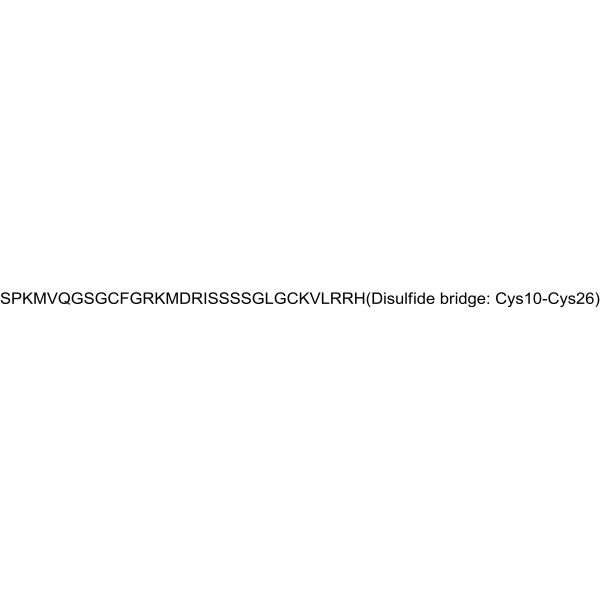 0 ImagesSynonyms: Brain Natriuretic Peptide-32 human; BNP-32Nesiritide (Brain Natriuretic Peptide-32 human) is a recombinant human B-type natriuretic peptide. Nesiritide is a NPRs agonist, with Kd values of 7.3 and 13 pM for NPR-A and NPR-C, respectively. Nesiritide regulates V1/2 activation/inactivation of the L-type calcium channel. Nesiritide shows vasodilatory, diuretic, and natriuretic activities. Nesiritide is used in cardiovascular diseases such as heart failure and vascular remodeling after arterial injury.
-
Homogentisic acid
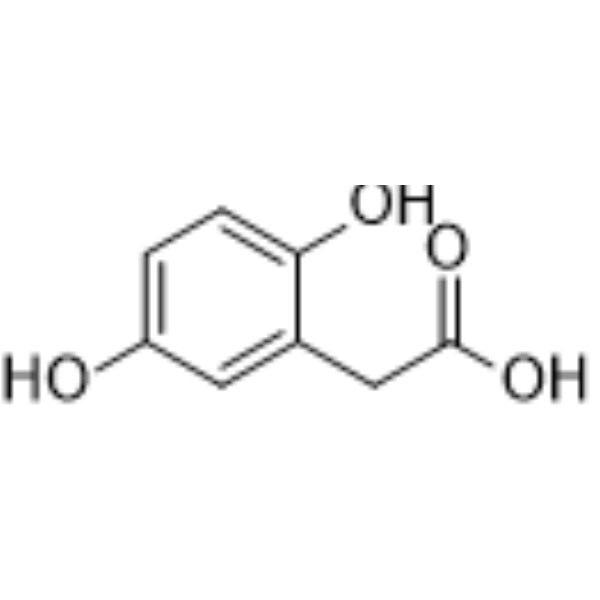 0 ImagesHomogentisic acid is an orally active, blood-brain barrier-permeable amyloidogenic compound that functions as both an amyloid component and a pigment precursor. Accumulation of homogentisic acid downregulates tight junction proteins (such as claudin-5, occludin, ZO-1) and impairs blood-brain barrier integrity. Homogentisic acid and its oxidation product benzoquinone acetic acid not only induce the aggregation and fibrosis of multiple proteins (such as Aβ1-42, α-synuclein, SAA, Transthyretin (TTR), atrial natriuretic peptide), but also trigger oxidative stress, damage to the Wnt/β-catenin pathway, and neurotoxicity, leading to ochronosis pigment deposition and synaptic dysfunction. At specific concentrations, homogentisic acid exerts no cytotoxicity or genotoxicity on human peripheral blood lymphocytes, and even counteracts the genotoxicity induced by Irinotecan (HY-16562). Homogentisic acid serves as an important tool molecule for investigating the mechanisms of diseases including ochronosis, secondary amyloidosis, Alzheimer's disease, and colorectal cancer.
-
A 71915
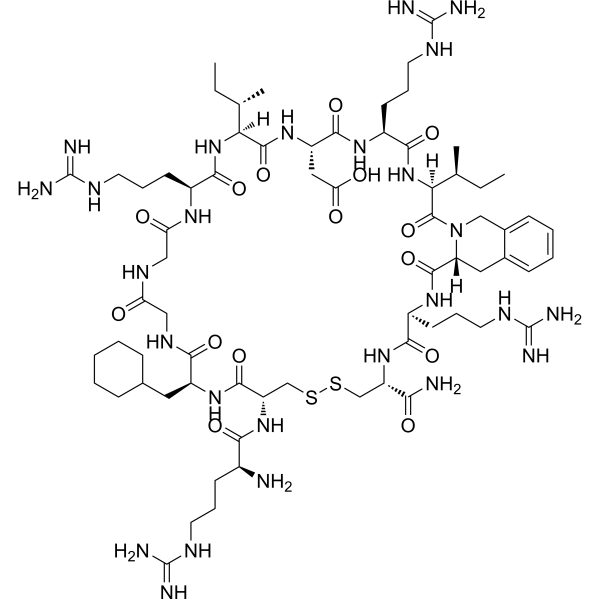 0 ImagesA 71915 is a highly potent and competitive natriuretic peptide receptor A (ANP, NPRA) antagonist (pKi= 9.18). A 71915 displaces [125I]ANP dose dependently, with a Ki of 0.65 nM. A71915( pA2= 9.48) against rat ANP-induced cGMP production in NB-OK-1 cells.
-
AP 811
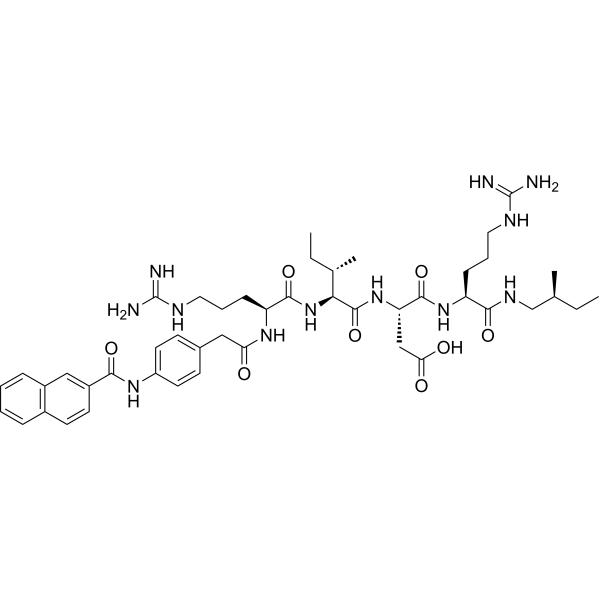 0 ImagesAP 811 is a selective atrial natriuretic peptide clearance receptor (ANP-CR, NPR3) antagonist with a Ki of 0.48 nM. AP 811 displays >20000-fold selectivity for NPR3 over NPR1. AP 811 abolishes ANP-induced pump stimulation.
-
Brain Natriuretic Peptide-45, mouse
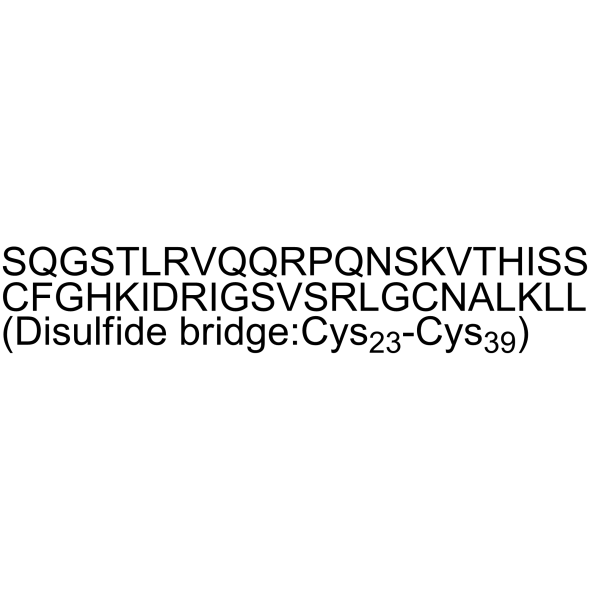 0 ImagesSynonyms: BNP-45, mouseBrain Natriuretic Peptide-45, mouse (BNP-45, mouse) is a 45-amino-acid peptide derived from the mouse BNP prohormone, which exhibits natriuretic, diuretic, and vasoactive effects. Brain Natriuretic Peptide-45, mouse contains all amino acid residues deemed critical for the biological activity of natriuretic peptides. Brain Natriuretic Peptide-45, mouse possesses hypotensive and diuretic activities.
-
CNP analogue-1
 0 ImagesCat. No.: HY-P11861CNP analogue-1 is a long-acting, low-isoelectric point C-type natriuretic peptide (CNP) analog. CNP analogue-1 activates human natriuretic peptide receptor 2 (hNPR2) with an EC50 of 0.18 nM. CNP analogue-1 stimulates cGMP production and is resistant to neprilysin-mediated degradation. CNP analogue-1 induces baroreceptor-mediated heart rate elevation and enhances the maximal rates of cardiac contraction and relaxation. CNP analogue-1 can be used in the research of heart failure with preserved ejection fraction.
-
Vixticibart
 0 ImagesCat. No.: HY-P990951CAS No.: 2845128-05-2Synonyms: REGN-5381Vixticibart (REGN-5381) is a fully human IgG4 monoclonal antibody and NPR1 agonist that targets NPR1. Vixticibart stabilizes the receptor in an activated conformation by binding to the N-terminal domain of NPR1, and enhances the activity of endogenous ligands ANP and BNP without blocking ligand binding when these ligands are present. Vixticibart exerts vasodilatory and hypotensive effects by inducing cGMP production, preferentially dilating venous vessels to reduce systolic and venous pressure, but does not induce diuresis and may trigger a compensatory increase in heart rate. Vixticibart produces a synergistic hypotensive effect when combined with angiotensin-converting enzyme inhibitors or angiotensin receptor blockers, and is currently mainly used in research related to heart failure and hypertension.
-
JS11
 0 ImagesJS11 is an inhibitor for natriuretic polypeptide receptor 1 (Npr1) with an IC50 of 1.9 μM for hNpr1. JS11 ameliorates the pruritus in mouse models.
-
ANP [Des18-22] 4-23 amide (rat)
![ANP [Des18-22] 4-23 amide (rat)](https://file.medchemexpress.com/product_pic/hy-p1526.gif "Click to View ANP [Des18-22] 4-23 amide (rat) Product Detail") 0 ImagesANP [Des18-22] 4-23 amide rat is a polypeptide fragment of rat atrial natriuretic peptide (ANP) that specifically binds NPR-C.
0 ImagesANP [Des18-22] 4-23 amide rat is a polypeptide fragment of rat atrial natriuretic peptide (ANP) that specifically binds NPR-C.
-
VUT-MK142
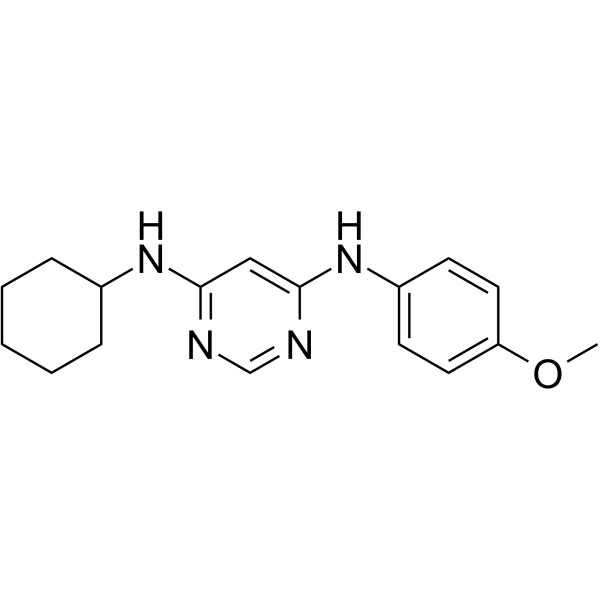 0 ImagesVUT-MK142 is a cardiomyogenic small molecule. VUT-MK142 upregulates the expression of the myocardial marker ANF and other myocardial markers. VUT-MK142 promotes the development of cardiovascular progenitor cells into beating cardiomyocytes, and facilitates the differentiation of cardiac anterior mesoderm into cardiomyocytes. VUT-MK142 can be used in the research of heart failure.
-
Anaritide
 0 ImagesSynonyms: Human atrial natriuretic factor (102–126)Anaritide is a synthetic form of atrial natriuretic peptide (ANP) composed of 25 amino acids. Anaritide increases glomerular filtration rate by dilating into and contracting out the bulbar arterioles. Anaritide can be used to study the effects on patients with acute tubular necrosis, particularly in improving dialysis free survival.
-
dCNP
 0 ImagesCat. No.: HY-P10869dCNP binds to NPR-B/C receptor, activates cGMP signaling pathway, and regulates vascular function. dCNP exhibits anti-hypoxia property through downregulation of hypoxia-related genes expressions like HIF1α and HIF2α. dCNP inhibits the induction of tumor stroma and exhibits anti-fibrosis activity. dCNP upregulates CTLs, NK cells, and conventional type 1 dendritic cells in tumors, and activates immune responses.
-
Imelciment
 0 ImagesCat. No.: HY-P990921CAS No.: 2845128-03-0Synonyms: REGN-9035HY-P990921 is an NPR1-targeting half-IG G4 -κ/h-CH2-CH3 type human antibody.
-
BNP(1-32), porcine
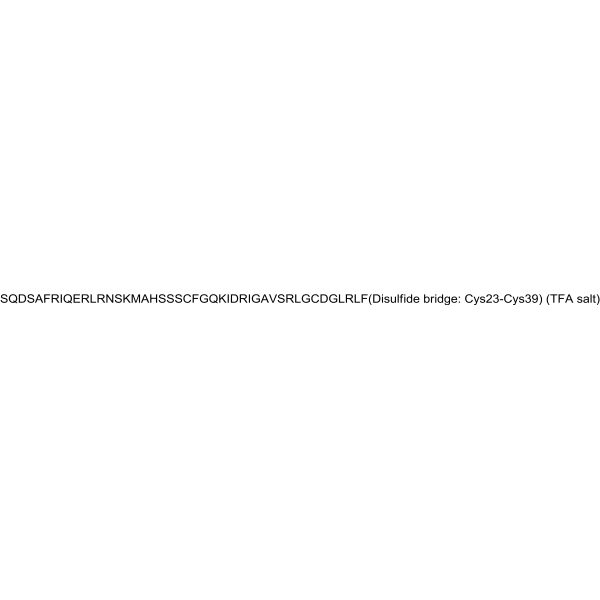
 0 ImagesCat. No.: HY-P10259CAS No.: 117345-87-6Synonyms: pBNP-32BNP(1-32), porcine (pBNP-32) is a cardiac hormone. BNP(1-32), porcine is an atrial natriuretic peptide, which exhibits natriuretic, diuretic and vasorelaxant effects. BNP(1-32), porcine affects passive avoidance learning in rats with dopaminergic, cholinergic, α-and β-adrenergic mediation.
-
NPRA agonist-11
 0 ImagesCat. No.: HY-177062CAS No.: 3055143-61-5NPRA agonist-11 (Example 161) is an NPRA (NPR1) agonist, with AC50 values of 1.681 μM and 0.989 μM for humans and monkeys, respectively. NPRA agonist-11 can be used in the research of cardiovascular diseases and other disorders.
-
Ularitide
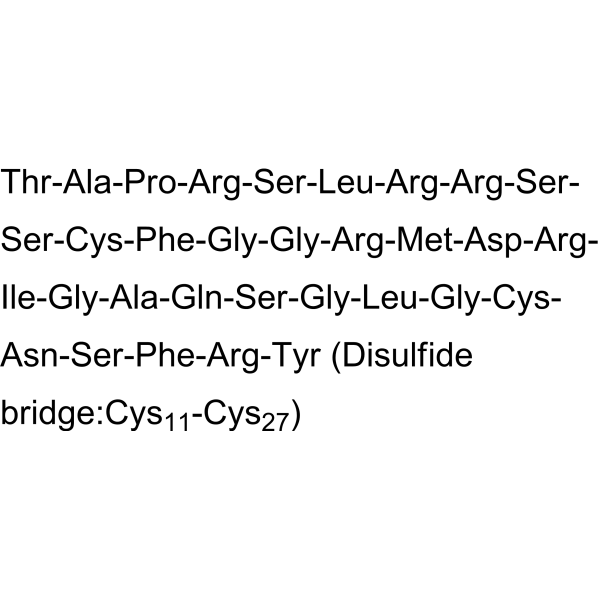 0 ImagesCat. No.: HY-P2687CAS No.: 118812-69-4Synonyms: Urodilatin (human)Ularitide (Urodilatin), natriuretic peptide, is a vasodilator. Ularitide binds to and activates renal receptors. Ularitide also regulates renal dopamine metabolism Ularitide can be used in the research of heart failure.
-
Urodilatin
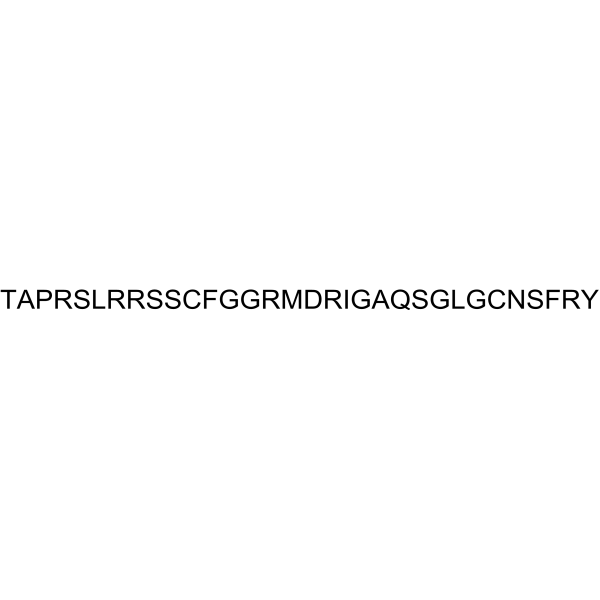 0 ImagesCat. No.: HY-120521CAS No.: 115966-23-9Urodilatin is an analogue of ANF-(99-126). Urodilatin is a diuretic-natriuretic regulatory peptide. Urodilatin can be used for research of acute renal failure, congestive heart failure, and bronchial asthma, etc.
-
BNP (1-21), Pro (Human)
 0 ImagesCat. No.: HY-P3758CAS No.: 286373-49-7BNP (1-21), Pro (Human) is a peptide containg 21 amino acids. B-Type Natriuretic Peptide (BNP), a cardiac natriuretic hormone. BNP together with the highly homologous atrial natriuretic peptide, it forms a dual natriuretic peptide system of the heart. BNP is responsible for changes in the heart organogenesis and is associated with transition to extrauterine life.
-
Nesiritide acetate
 0 ImagesCat. No.: HY-P0003ACAS No.: 1684439-46-0Synonyms: Brain Natriuretic Peptide-32 human acetate; BNP-32 acetateNesiritide (Brain Natriuretic Peptide-32 human) acetate is a recombinant human B-type natriuretic peptide. Nesiritide acetate is a NPRs agonist, with Kd values of 7.3 and 13 pM for NPR-A and NPR-C, respectively. Nesiritide acetate regulates V1/2 activation/inactivation of the L-type calcium channel. Nesiritide acetate shows vasodilatory, diuretic, and natriuretic activities. Nesiritide acetate is used in cardiovascular diseases such as heart failure and vascular remodeling after arterial injury.
- 1
- 2



